Choosing the right toys for your toddler is about fostering meaningful growth in language, motor skills, creativity and sensory development. At The Learning Nest, we focus on toys and materials that support independence, hands-on discovery, and purposeful play – principles central to Montessori-inspired learning.
This curated list of toddler-friendly toys includes educator-approved options that spark curiosity, build independence and support development across key learning domains.
What Makes a Toy “Great” for Toddlers?

Before we jump in, it’s helpful to understand what makes a toy developmentally beneficial for toddlers (ages 1–3). Great toddler toys:
- Encourage open-ended play (multiple ways to use it)
- Support key developmental milestones (language, coordination, sensory exploration)
- Are durable, safe and easy to grasp
- Can be used independently (e.g., stacking, sorting, posting) or support simple social interactions like turn-taking and imitation
- Reflect real-world objects and skills
You’ll find that many toys below are simple and that’s by design. Simple, open-ended toys give toddlers more freedom to explore and learn.
1. Stacking Cups or Nesting Bowls
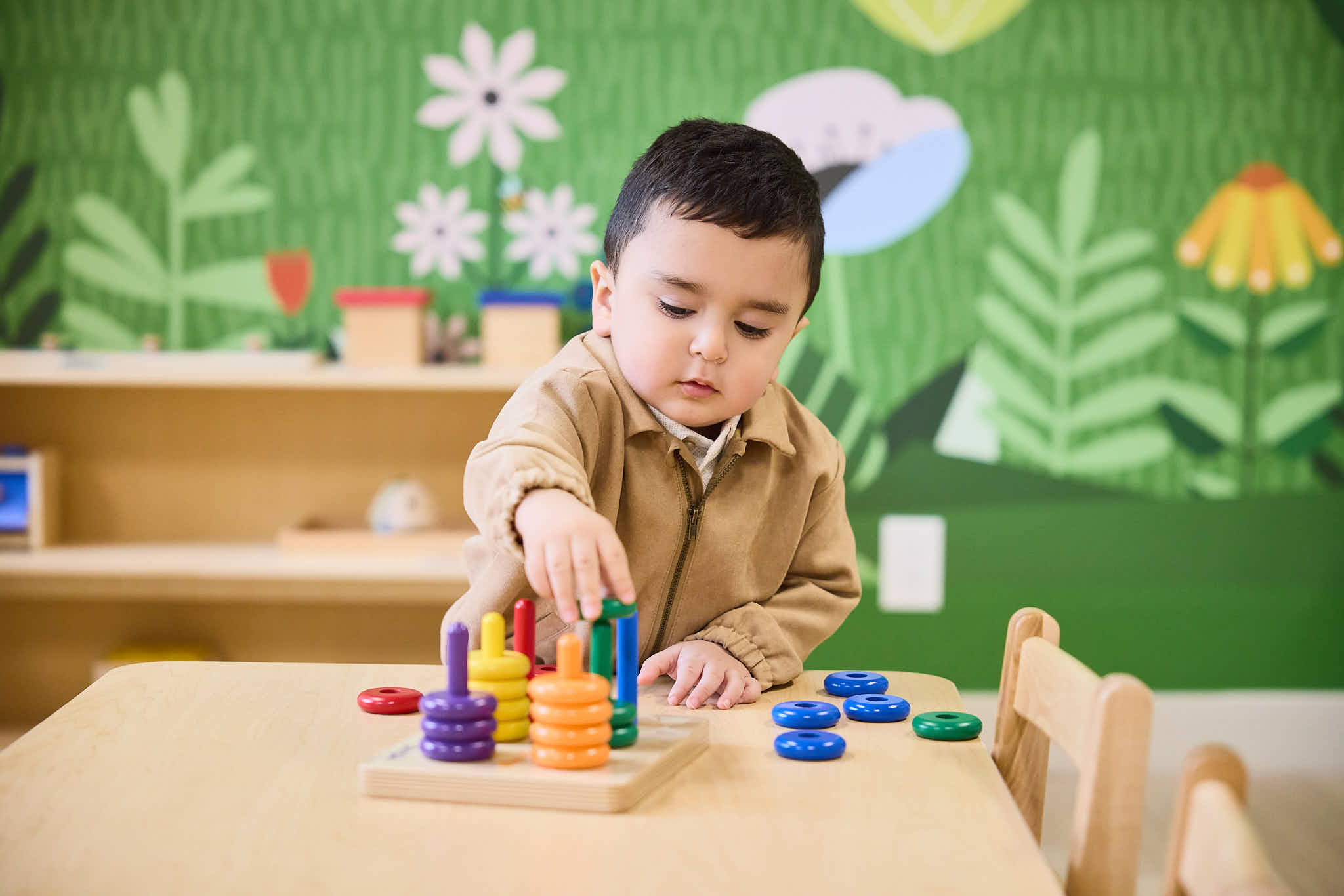
Why We Love It: Stacking and nesting support early math thinking, problem-solving and hand-eye coordination.
Developmental Focus:
- Spatial awareness (bigger vs. smaller)
- Sequencing and order
- Early logic and reasoning
Montessori Connection: These toys naturally include a control of error, meaning children can see when something doesn’t fit or stack correctly and adjust independently without adult help.
2. Wooden Blocks (Basic or Themed Sets)
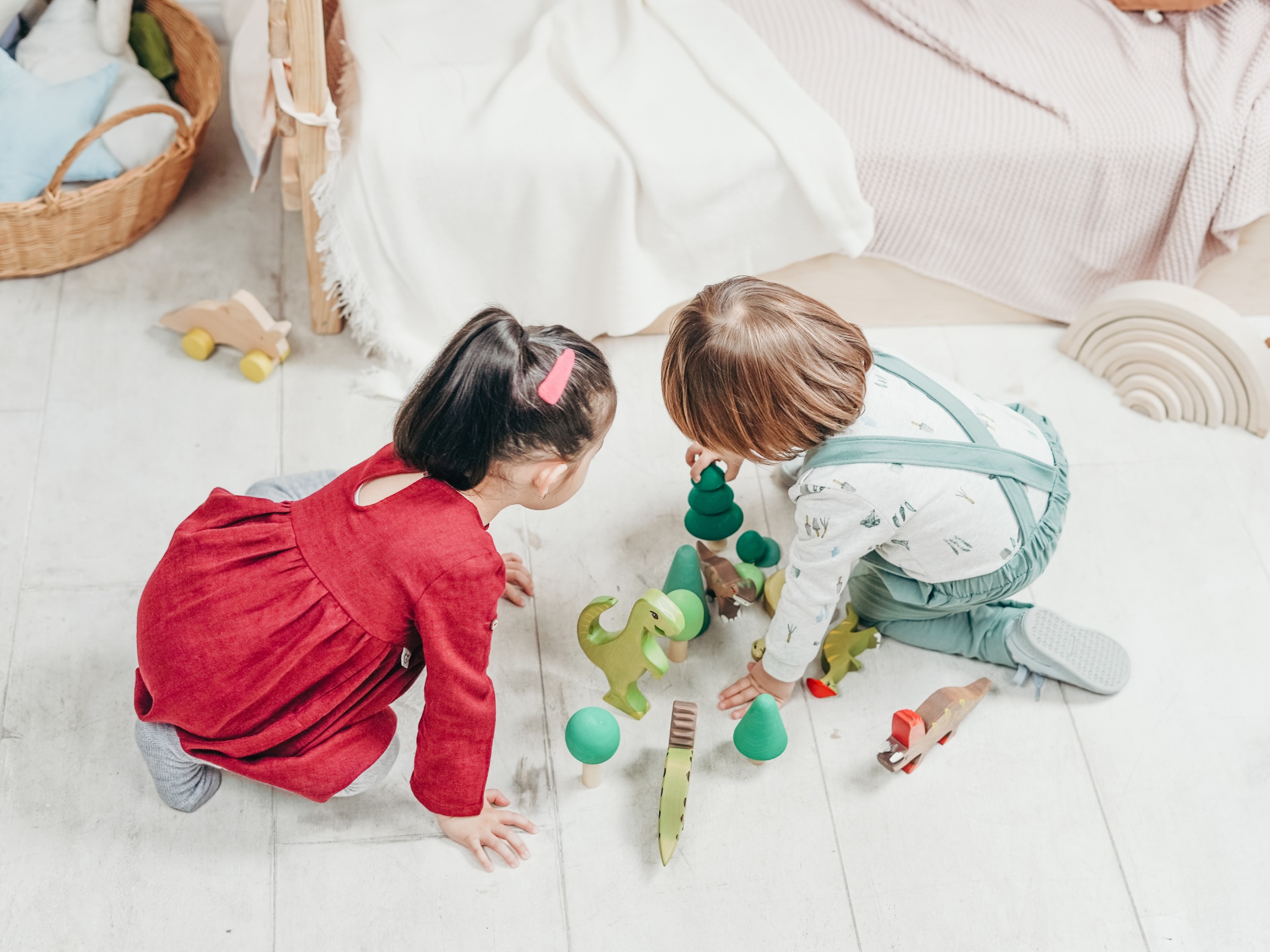
Why We Love It: Classic blocks allow for imaginative play and fine motor development. Whether it’s towers, bridges or pretend towns, blocks never get old.
Developmental Focus:
- Creative thinking
- Grip strength and balance
- Early STEM concepts like gravity
Montessori Connection: Montessori environments favour simple, open-ended materials – often made from natural wood – that encourage concentration, creativity and self-directed exploration.
Tip: Opt for natural wood blocks or those with simple shapes and colours.
3. Push and Pull Toys
Why We Love It: These toys build gross motor strength and encourage movement, critical for toddlers developing coordination and confidence.
Developmental Focus:
- Balance and walking
- Muscle coordination
- Cause and effect (pull = movement)
Examples: Pull-along animals, push carts, toy lawn mowers
The Learning Nest Approach: Our toddler classrooms often include push/pull toys to support physical development and early independence.
4. Shape Sorters and Puzzles
Why We Love It: Shape sorters encourage problem-solving and visual discrimination. Chunky puzzles strengthen hand muscles and cognitive skills.
Developmental Focus:
- Shape and colour recognition
- Matching and memory
- Hand-eye coordination
Montessori Connection: Many Montessori materials isolate one concept at a time – such as shape or size – allowing children to focus, repeat the activity and build mastery.
Recommended Picks: Wooden puzzles, Montessori coin boxes, shape sorters with large handles
5. Pretend Play Sets (Kitchen, Tools, Doctors Kits)
Why We Love It: Pretend play develops language, empathy and social understanding. It’s also one of the earliest forms of storytelling.
Developmental Focus:
- Vocabulary expansion
- Emotional regulation
- Cooperative play
Montessori Tip: Choose props that look and function like real tools. Realistic kitchen items, doctor kits or household tools help toddlers connect play to everyday life and build practical skills.
In Our Classrooms: Our dramatic play areas are a vital part of how toddlers develop imagination and social confidence.
6. Sensory Bins and Loose Parts Play
Why We Love It: Loose parts like dried beans, pom-poms, scoops and bowls offer unlimited possibilities. They invite exploration, sorting and experimentation.
Developmental Focus:
- Tactile input
- Classification and pattern recognition
- Fine motor skills
Tip: Supervise closely with small parts, or use edible bases like oats or rice for younger toddlers.
The Learning Nest Approach: We create rotating sensory bins filled with seasonal or themed materials to build focus and curiosity.
7. Books with Texture, Flaps and Real Photos
Why We Love It: Reading is one of the most powerful tools for brain development in toddlers. Books with touch-and-feel elements or realistic imagery enhance engagement.
Developmental Focus:
- Receptive and expressive language
- Listening skills
- Visual and tactile engagement
Montessori Tip:Montessori philosophy encourages books with realistic images and simple language so toddlers can clearly connect new words to the real world.
Parent Tip: Create a cozy book nook and let toddlers choose what to “read.”
8. Music Instruments (Shakers, Drums, Xylophones)
Why We Love It: Music supports rhythm, motor coordination and self-expression. Instruments are also great for social play and turn-taking.
Developmental Focus:
- Auditory awareness
- Cause and effect
- Gross and fine motor coordination
Montessori Connection: Musical instruments support sensorial learning, allowing children to explore sound, rhythm and cause-and-effect through hands-on experience.
Popular Picks: Wooden tambourines, egg shakers, child-safe drums
9. Posting and Threading Toys
Why We Love It: Toys that involve dropping, threading or inserting items (like coin boxes or lacing beads) build precision and cognitive control.
Developmental Focus:
- Fine motor refinement
- Problem-solving
- Hand-eye coordination
Montessori Connection: Posting activities are classic Montessori materials that refine fine motor skills and concentration through repetition and precise movement.
10. Ride-On Toys (for Indoors or Outdoors)
Why We Love It: Movement-based toys build gross motor strength and spatial awareness while promoting a sense of independence.
Developmental Focus:
- Coordination and balance
- Body control
- Spatial orientation
Bonus: Outdoor ride-ons also help burn energy during long winter days.
Toy Safety & Practical Tips for Parents
When selecting toys for toddlers:
- Choose non-toxic, BPA-free materials
- Avoid choking hazards for under 3
- Opt for natural textures like wood, silicone and cotton
- Limit toys with excessive lights and sounds
- Choose quality over quantity, less is more when it comes to playtime focus
The Learning Nest Philosophy on Toys

At The Learning Nest, we thoughtfully select materials that align with our curriculum and support open-ended exploration. Each classroom is stocked with:
- Real, purposeful materials that reflect the child’s world
- Simple materials that spark imagination
- Safe tools that encourage independence and hands-on learning
- Rotating activities that meet evolving developmental needs
Choosing toys with purpose can turn everyday play into powerful learning. From stacking cups to pretend kitchens, these toddler toys help children build motor skills, confidence and creativity, all while having fun. Whether at home or at daycare, thoughtful toy selection makes all the difference in early development.
Want to see how we use toys to support learning at The Learning Nest? Schedule a tour at our North York or Junction locations today.