Babies begin communicating long before they speak their first words. Through eye contact, gestures, sounds and facial expressions, infants are constantly trying to express their needs and connect with the people around them. Yet, there is often a gap between what babies understand and what they can verbally communicate. This gap can sometimes lead to frustration for both children and caregivers.
At The Learning Nest, we support early communication through intentional, responsive interactions and developmentally appropriate tools. One powerful and effective approach is introducing simple Baby Sign Language signs for infants.
By incorporating a few foundational signs into daily routines, caregivers can give infants a meaningful way to express themselves, supporting language development, strengthening relationships and building confidence from a very early age.
What Is Baby Sign Language?
Baby sign language is the practice of teaching infants simple, functional signs to help them communicate before they are able to speak.
These signs are typically centered around everyday needs and experiences, such as:
- Milk
- More
- All done
- Eat
- Sleep
- Help
Baby sign language focuses on a small set of practical, high-frequency signs that are easy for infants to recognize and replicate. These signs are always paired with spoken words, gestures and context, ensuring that verbal language development is supported alongside non-verbal communication.
Most babies can begin understanding signs between 6 to 9 months of age and may start using them shortly after, depending on their development and exposure.
Why Introduce Baby Sign Language to Infants?
1. Reduces Frustration for Babies and Caregivers
One of the most immediate benefits of baby sign language is a reduction in frustration. When infants are unable to communicate their needs clearly, it often results in crying or distress.
Simple signs provide an alternative. A baby who can sign “more,” “milk” or “all done” has a clear and effective way to communicate their needs without becoming overwhelmed. This not only supports emotional regulation but also helps caregivers respond more quickly and confidently.
2. Supports Early Language Development
A common concern among parents is whether signing might delay speech. In reality, research consistently shows the opposite, baby sign language supports and enhances language development.
When signs are paired with spoken words, babies begin to build strong connections between actions, sounds and meanings. This reinforces vocabulary, improves comprehension and lays the foundation for expressive language.
In many cases, children who are exposed to signing early may even develop stronger verbal skills later on due to this early language reinforcement.
3. Strengthens Bonding and Connection
Communication is at the heart of every relationship. When a baby can successfully communicate and a caregiver responds, it creates a powerful feedback loop of trust and understanding.
Signing encourages more intentional interaction, caregivers slow down, make eye contact, repeat words and gestures and become more attuned to the child’s cues. This responsiveness strengthens emotional bonds and helps infants feel secure, understood and valued.
4. Encourages Cognitive Development
Learning to use signs involves memory, imitation and association, all essential cognitive skills in early childhood development.
When a baby signs “more” and receives more food, they begin to understand cause and effect. When they associate a sign with a word and an action, they are building neural connections that support learning, reasoning and problem-solving.
These early cognitive experiences play an important role in overall brain development.
5. Builds Confidence and Early Independence
Being able to communicate even in simple ways gives infants a sense of control over their environment. Instead of relying solely on adults to interpret their needs, they can actively participate in interactions.
This fosters independence, boosts confidence and encourages active engagement in daily routines like mealtime, playtime and transitions.
When Should You Start Teaching Baby Sign Language?
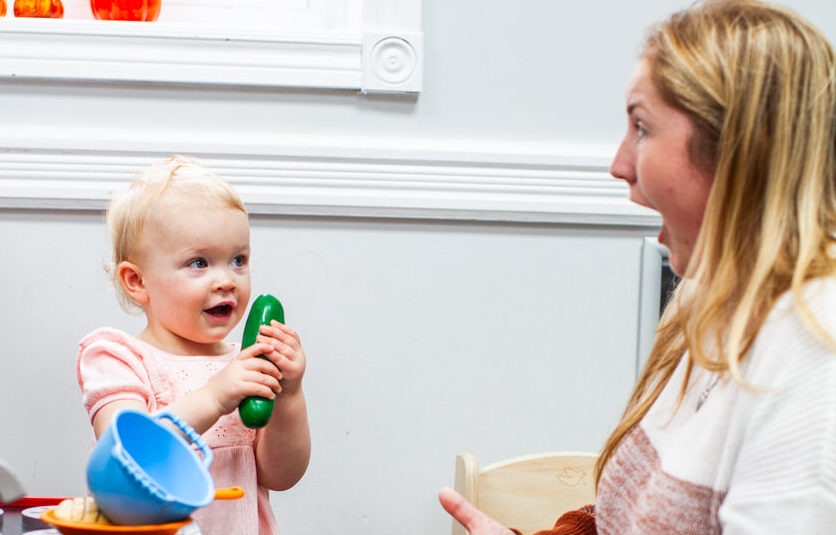
Happy infant shows toy cucumber to surprised adult
You can begin introducing signs as early as 6 months of age, when babies start developing the motor skills and awareness needed to observe and imitate gestures.
However, the exact timing is less important than consistency and repetition. Even if your baby is not signing back right away, they are still absorbing and learning from the experience.
How to Introduce Baby Sign Language Signs to Your Baby
Introducing baby sign language doesn’t require formal lessons or special tools. It can be naturally integrated into your daily routines.
Start Small
Begin with 3–5 essential signs that are relevant to your baby’s everyday experiences, such as:
- Milk
- More
- Eat
- All done
- Help
Focusing on a small set of signs makes it easier for babies to learn and for caregivers to stay consistent.
Pair Signs with Spoken Words
Always say the word as you make the sign. For example, say “more” while signing it during mealtime.
This ensures that your baby is learning both the gesture and the verbal language simultaneously.
Use Signs in Context
Repetition in meaningful situations is key. Sign “eat” when offering food, “all done” when finishing an activity and “sleep” during bedtime routines.
The more consistently signs are used in context, the faster babies will begin to understand and eventually use them.
Be Patient and Observant
Every child develops at their own pace. Some babies may start signing within a few weeks, while others may take longer.
Watch for attempts, early signs may not be perfect, but they are meaningful. Responding positively encourages continued communication.
Simple Signs to Start With
Here are a few beginner-friendly signs commonly used with infants:
- More: Tap fingertips of both hands together
- All Done: Turn both hands outward to signal completion
- Milk: Open and close your fist (like squeezing)
- Eat: Tap fingertips to lips
- Help: One hand lifts the other upward
Keep your gestures clear, slightly exaggerated and consistent to make them easier for babies to recognize and imitate.
How We Use Baby Sign Language at The Learning Nest
At The Learning Nest, communication is embedded into every part of a child’s day. We incorporate simple Baby Sign Language signs naturally into routines, ensuring that they feel meaningful rather than forced.
Educators model signs during:
- Mealtimes: “eat,” “more,” “all done”
- Transitions: “wait,” “help”
- Social interactions: “please,” “thank you”
These signs are always paired with spoken language, eye contact and responsive interaction. This creates a rich communication environment where children feel supported and encouraged to express themselves.
Our approach aligns with our philosophy of fostering independence, confidence and hands-on learning from an early age.
“We believe every child deserves to be understood, even before they have the words. Baby Signs give infants a way to communicate their needs and feelings from a very early age. Something as simple as signing “more” at snack time or “all done” tells us exactly where they are at. It reduces frustration and builds confidence and you can see the difference it makes.”
– Komal Kaur, RECE, Infant 1 Educator
Common Misconceptions About Baby Sign Language
“Will signing delay my child’s speech?”
No. Signing supports language development by reinforcing vocabulary and comprehension. It gives babies a head start in communication, not a delay.
“Do I need to learn Baby Sign Language fully?”
Not at all. Starting with a few practical signs is enough to make a meaningful difference in your child’s ability to communicate.
“What if my baby doesn’t sign back?”
Even if your baby isn’t signing yet, they are still learning. Understanding always comes before expression. Consistent exposure will eventually lead to participation.
“Is baby sign language only for certain children?”
No, baby sign language can benefit all infants. It is especially helpful for children who may need additional support with communication, but it is equally valuable for developing children.
Tips for Parents Getting Started
- Make signing part of your daily routine
- Stay consistent with the same signs and words
- Keep interactions positive and engaging
- Follow your child’s lead and interests
- Celebrate small attempts and progress
Remember, the goal is not perfection, it’s connection.
Introducing Baby Sign Language for infants is a simple yet powerful way to support early communication. By giving babies the tools to express themselves before they can speak, you reduce frustration, strengthen your bond and create a strong foundation for language development.
At The Learning Nest, we believe communication begins long before words. Through intentional interactions, responsive caregiving and supportive tools like baby sign language, we help children build confidence, independence and meaningful connections from the very start.
Want to see how we support early communication and development in our classrooms?
Contact us today to schedule a tour at our North York or Junction locations.