Support Confidence, Coordination and Focus with Everyday Montessori-Inspired Tasks
Helping children build concentration isn’t about forcing them to sit still, it’s about offering the right activities at the right time. From toddlers to preschoolers, kids thrive when given hands-on tasks that support focus, independence and confidence.
At The Learning Nest, our environments are designed to nurture these skills through intentional, age-appropriate experiences rooted in Montessori.
In this blog, we’ll explore:
- Why concentration matters in early childhood
- 15 simple activities that improve focus (great for both home and daycare!)
- Tips for creating a Montessori-friendly environment at home
Why Is Concentration Important for Young Children?

Concentration is the foundation of learning. When children can focus their attention, even briefly, they build cognitive stamina, emotional regulation and the ability to complete a task from start to finish. It’s not just about “paying attention”, it’s about engaging deeply with the world around them.
Key benefits of supporting concentration:
- Improves problem-solving and creativity
- Builds self-confidence and independence
- Strengthens fine and gross motor skills
- Helps with transitions into school environments
At The Learning Nest, our educators design each day to support deep focus, whether that’s through sensory exploration, or language-rich storytelling.
15 Montessori-Inspired Activities to Improve Concentration
The best activities are simple, repeatable and grounded in real-life purpose. Here are 15 toddler and preschool-friendly ideas that support attention, coordination and daily life skills:
1. Pouring Water Between Pitchers
- Why It Works: Strengthens hand control and requires visual focus.
- How to Set It Up: Offer two small glass pitchers, one with water, one empty. Show your child how to pour slowly from one to the other.
- Skill Focus: Hand-eye coordination, motor planning, self-regulation.
2. Sorting Objects by Colour or Shape
- Why It Works: Introduces categorization and attention to detail.
- Materials: Buttons, pom-poms, beads, or natural objects like leaves or pebbles.
- Tip: Keep it quiet and focused, allow them to sort at their own pace.
3. Using Dressing Frames or Zippers
- Why It Works: Builds grip strength and persistence.
- Materials: Montessori dressing frames or clothing with zippers, snaps, or buttons.
- Skill Focus: Fine motor development, patience, focus.
4. Transferring with Tongs or Spoons
- Activity: Move small items (cotton balls, beans) from one bowl to another using tongs or a spoon.
- Montessori Connection: This is a classic practical life exercise that builds focus and coordination.
5. Watering Plants
- Why It Works: Children learn responsibility and care while staying focused on a specific task.
- Materials: Small watering can and real plants.
- Bonus: Great for calming high-energy moments.
6. Table Washing or Window Washing
- Why It Works: Physical, goal-oriented and satisfying.
- Setup: A sponge, water bowl, spray bottle and cloth for drying.
- Montessori Insight: Practical life activities help children feel purposeful and calm.
7. Food Preparation (Cutting Bananas, Peeling Oranges)
- Why It Works: Hands-on, safe kitchen tasks provide deep focus and build independence.
- Tools: Child-safe knives, cutting boards, fruit or cheese.
8. Scooping and Transferring with Spoons
- Variation: Use rice, lentils, or sand in a tray with two bowls.
- Developmental Goal: Builds bilateral coordination and attention to sequence.
9. Simple Threading or Beading
- Tools: Large wooden beads and laces.
- Why It Works: Excellent for attention span, pattern recognition and fine motor strength.
10. Matching Cards or Object-to-Picture Matching
- How: Provide real-life objects with corresponding images or duplicate cards.
- Educational Value: Builds memory and visual perception.
11. Rolling Up a Mat or Cloth
- Why It Works: Teaches control, sequencing and care for the environment.
- Montessori Tip: This is a real task that toddlers love to repeat.
12. Folding Towels or Napkins
- Age Group: 2.5–5 years
- Why It Works: Involves spatial awareness and repetition, ideal for focus.
13. Sponge Transfer Activity
- Setup: Two bowls, one filled with water and a sponge to transfer the water.
- Outcome: A soothing, repeatable activity that sharpens hand strength.
14. Mirror Cleaning or Polishing a Surface
- Materials: A spray bottle with water, soft cloth, mirror or tray.
- Why It’s Great: Children focus on small movements and take pride in their work.
15. Open-Ended Art (Finger Painting, Watercolour)
- Tip: Set clear boundaries with tools (limit to one or two colours at a time).
- Outcome: Enhances focus through texture and process rather than perfection.
How to Set Up a Montessori-Friendly Space at Home
You don’t need to overhaul your entire house, just a few small shifts can help create an environment that supports your child’s independence and focus.
1. Low, Accessible Shelving
- Arrange materials in trays or baskets that your child can reach without help.
2. Limit Visual Clutter
- Keep shelves clear and offer only a few materials at a time to reduce overstimulation.
3. Use Real, Child-Sized Tools
- Swap plastic for real wood or metal tools sized for little hands.
4. Create a Calm Atmosphere
- Avoid screens or background noise during activity time. Play soft music if needed.
5. Observe and Rotate
- Notice what your child is drawn to and rotate activities to sustain interest and extend learning.
How The Learning Nest Supports Focus and Independence
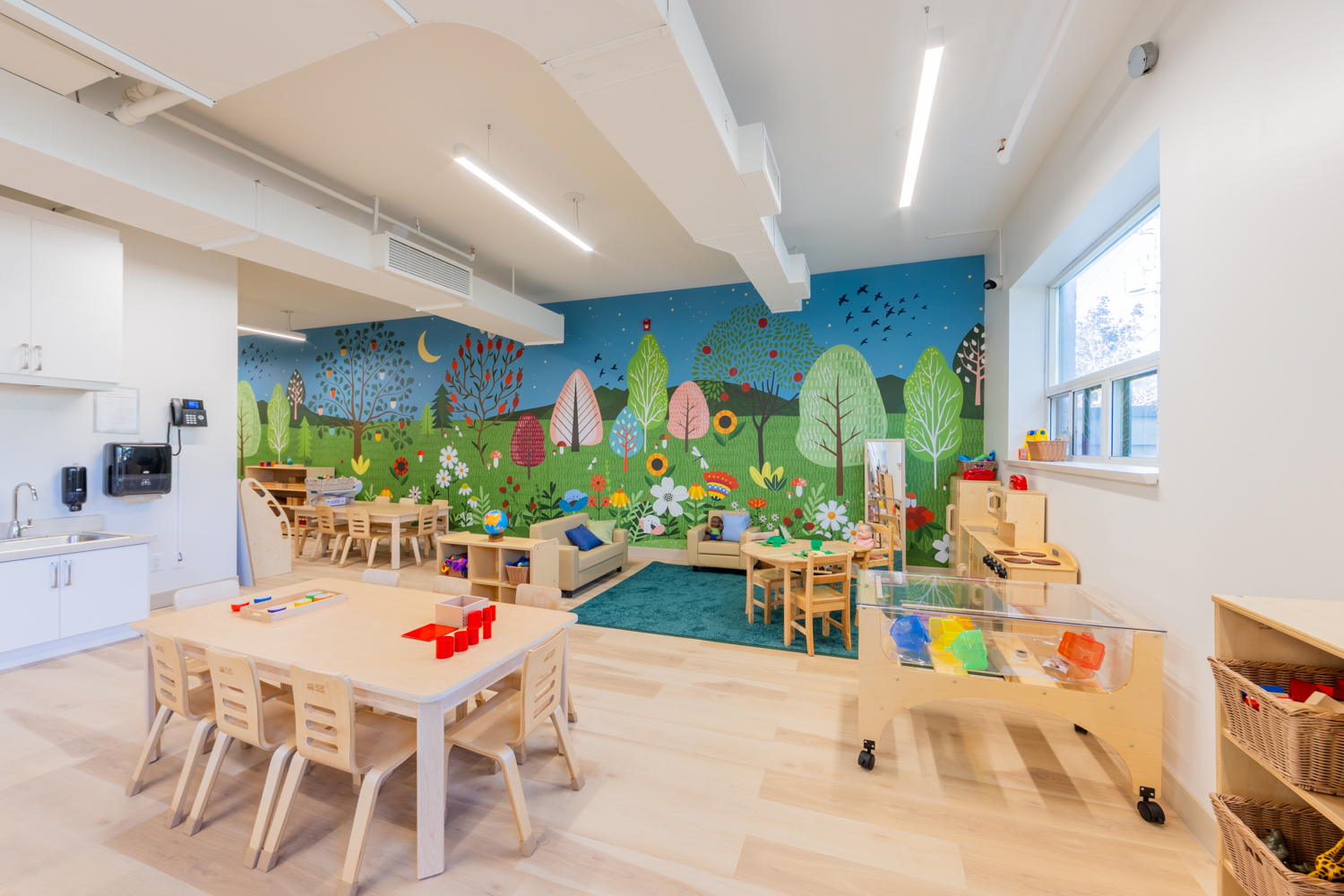
At The Learning Nest, everything from our classroom layout to our daily routines is designed to build children’s concentration and confidence.
- Intentional Environments: Calm, organized spaces with natural light and neutral tones reduce distraction and promote attention.
- Practical Life Activities: Our classrooms feature tasks like food prep, plant care, sweeping and hand washing to build independence.
- Small Class Sizes: Our low ratios mean educators can observe and support each child’s individual rhythm of focus and interest.
- Learning: We balance independent work with group projects and peer collaboration to extend engagement.
- Daily Outdoor Time: Outdoor gross motor play helps balance energy and increase readiness for focused indoor tasks.
Add Quote
Explore Our Programs to see how we tailor learning experiences for infants, toddlers and preschoolers.
Concentration Is a Skill We Can Nurture
Just like walking or talking, concentration is a developmental skill that improves with time and practice. The key isn’t pushing children to “pay attention” longer, it’s giving them tasks that naturally engage their hands, minds and hearts.
By offering meaningful, manageable activities that build confidence and purpose, you’re helping your toddler develop the lifelong ability to focus, persevere and learn with joy. Book a Tour of our North York or Junction campus today.