When the temperature drops and outdoor time is limited, winter is the perfect season to turn your preschooler’s creative energy indoors. Art and craft projects are fun and essential for developing fine motor skills, encouraging creativity and helping children express themselves through colour, texture and imaginative thinking.

Child doing craft activities
At The Learning Nest, art is woven into everyday experiences. Our classrooms are equipped with open-ended materials that allow children to explore seasonal themes while supporting their developmental needs.
1. Cotton Ball Snowy Landscapes
What You Need: Blue construction paper, cotton balls, glue and child-safe scissors
Skill Focus: Fine motor control, spatial awareness
Preschoolers can tear or roll cotton balls and glue them onto a blue background to create snowy scenes. Encourage your child to talk about what they’re making, whether it’s snowmen, snowy trees or fluffy clouds.
2. Pinecone Painting
What You Need: Pinecones, white paint, glitter (optional), brushes
Skill Focus: Grip strength, creativity
Use pinecones collected from nature walks and let children “frost” them with paint or sprinkle with glitter. These make beautiful decorations and help children explore texture and 3D art.
3. Snowflake Stamping with Toilet Paper Rolls
What You Need: Empty toilet rolls, white paint, paper
Skill Focus: Pattern recognition, stamping technique
Flatten and cut slits in one end of the tube, then spread it out like a star. Dip into white paint and stamp onto dark paper to create snowflake prints.
4. Salt & Glue Snowflakes
What You Need: Black construction paper, white glue, table salt, pipette and food colouring (optional)
Skill Focus: Precision, patience, sensory exploration
Preschoolers can draw snowflake shapes with glue, sprinkle with salt and (optionally) drop small bits of diluted food colouring using a pipette for a vibrant, crystallized effect.
5. Winter Handprint Trees
What You Need: Paint, paper, child’s hand
Skill Focus: Sensory input, body awareness, colour use
Dip a hand into brown paint to create a trunk and branches, then use fingertips dipped in white, silver or blue to add snow and decorations. A fun way to combine sensory and seasonal learning!
6. Mitten Collage Craft
What You Need: Coloured paper, markers, stickers, yarn
Skill Focus: FIne motor skills, bilateral coordination
Cut out mitten shapes and let children decorate with stickers, paper cutouts, or buttons. Punch holes and lace yarn around the edges for added dexterity practice.
7. Snowman Playdough Sculptures
What You Need: White playdough, googly eyes, buttons, pipe cleaners
Skill Focus: Hand strength, creativity
Instead of a paper snowman, create one in 3D! Use playdough and accessories to build fun winter characters, an engaging way to practice rolling, pinching and designing.
8. Frozen Suncatchers
What You Need: Pie tins, water, natural items (leaves, berries), ribbon
Skill Focus: Science curiosity, fine motor skills
Fill tins with water and decorations, freeze them, and hang outdoors on a tree with string. Talk about what happens when the temperature warms and how water turns to ice and back again.
9. Winter Colour Mixing with Watercolours
What You Need: Watercolours, droppers, paper towels
Skill Focus: Experimentation, focus, colour recognition
Use a dropper to mix cool winter shades, blues, purples, greys and paint abstract winter skies. Watch how the colours blend and bleed into each other on textured paper towels.
10. Story-Inspired Art Projects
What You Need: A winter storybook and basic craft supplies
Skill Focus: Language development, literacy connection
After reading a seasonal book (like The Snowy Day or Bear Snores On), invite children to recreate a favourite scene using collage, finger paint, or modelling clay. This builds comprehension and encourages creative storytelling.
Why Arts and Craft Matter in Early Childhood
Art supports much more than creativity. For preschoolers, hands-on crafts encourage:
- Fine Motor Development: Cutting, gluing, squeezing and painting all help strengthen hand muscles and coordination, essential for writing and self-help skills.
- Self-Expression: Children learn to express emotions and thoughts when given open-ended materials like loose buttons, fabric scraps, or plain clay that have no single “right” way to be used, and get the freedom to create.
- Focus and Patience: Following multi-step instructions builds sequencing skills and attention span.
- Confidence: When children complete a project and see their work displayed, it boosts self-esteem and pride in their abilities.
- Early Math & Science: Art serves as a child’s first laboratory. Beyond sorting colors or counting objects, preschoolers engage in the scientific method: they form hypotheses (“What happens if I mix these two colors?”), experiment with chemistry (observing how liquid paint transforms into a solid as it dries), and explore physics (testing how much weight a glue-bound structure can support). This process-driven play builds the foundational cognitive habits of a child
How We Approach Art at The Learning Nest
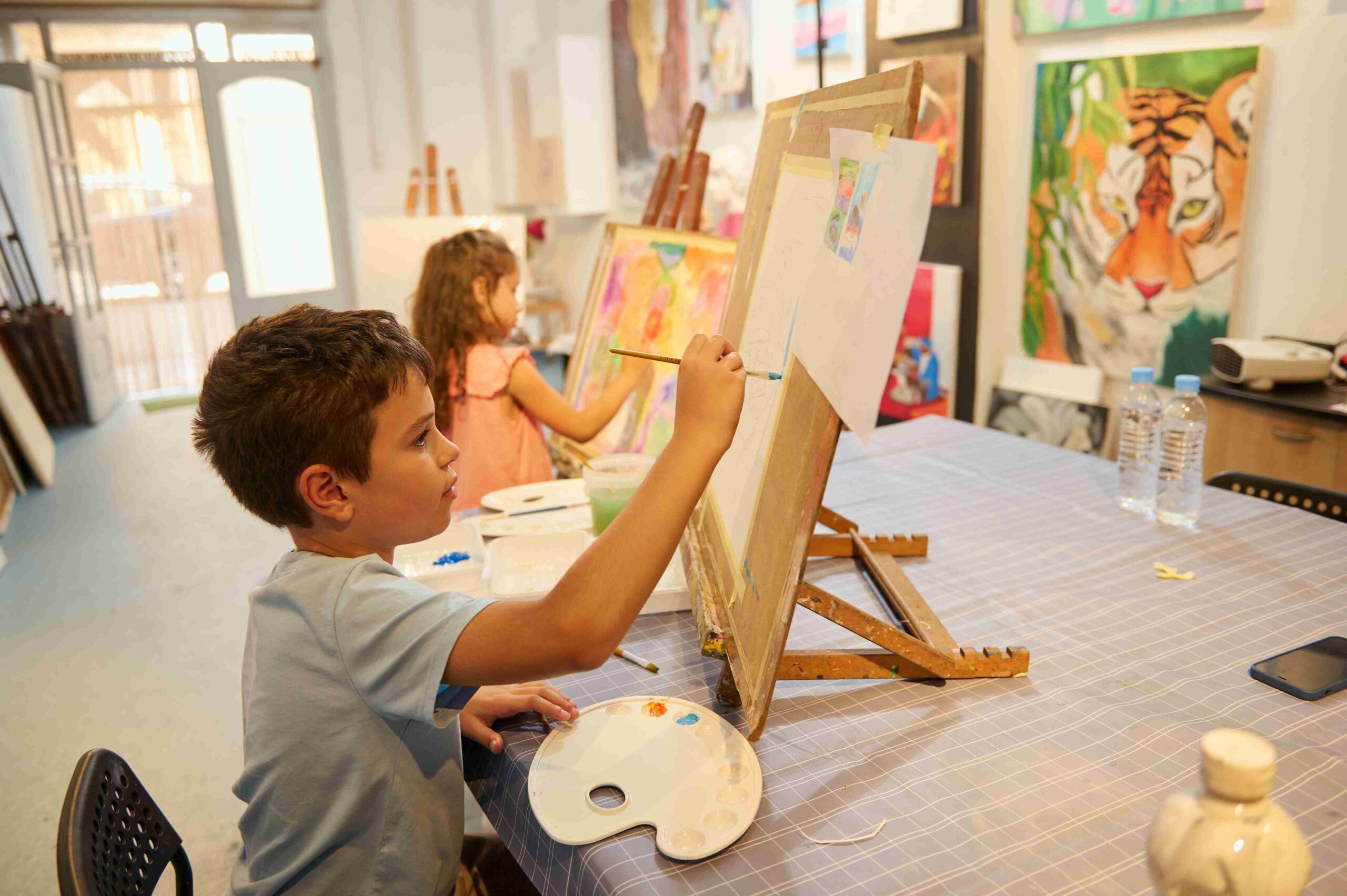
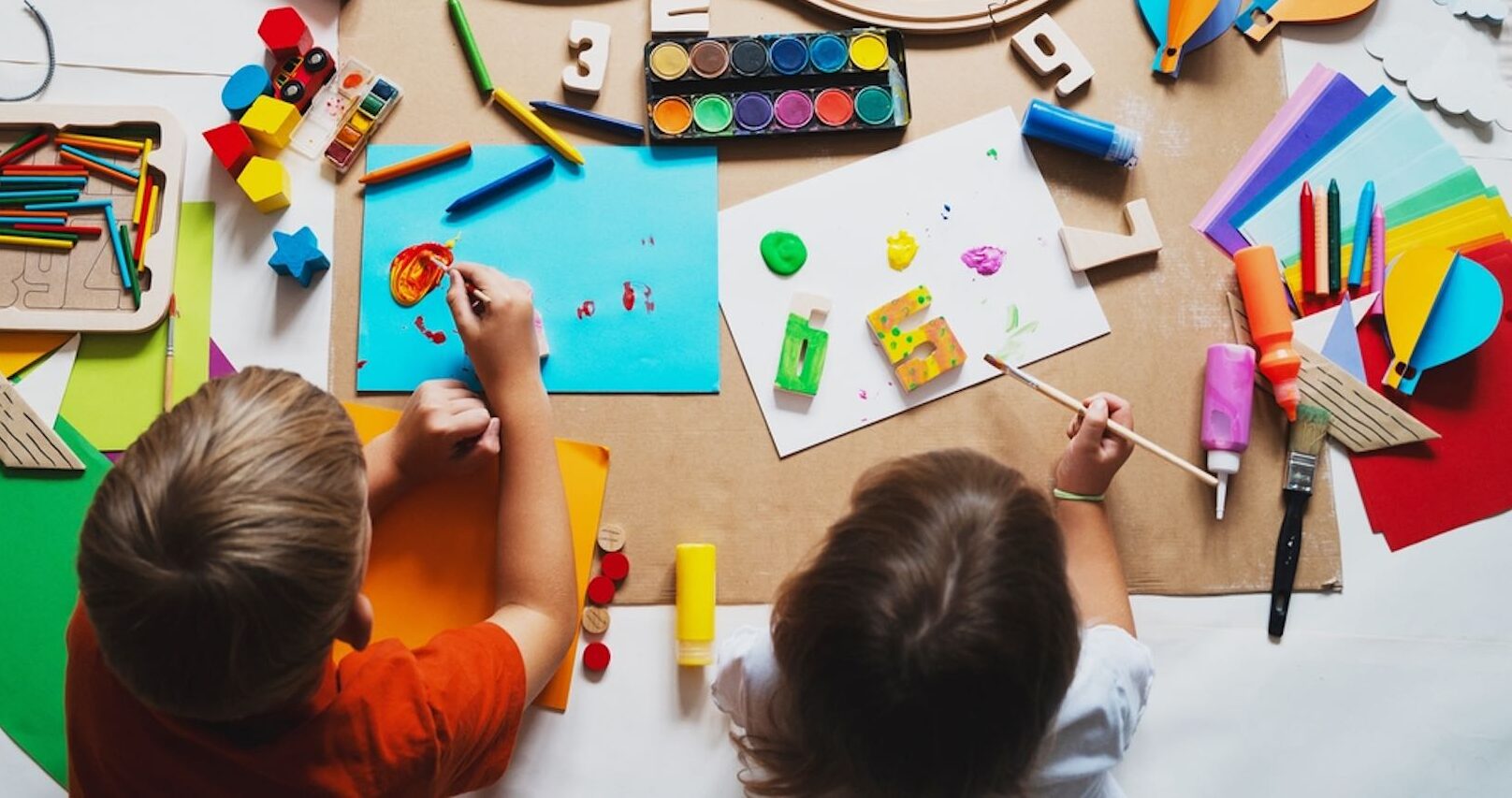
Image representing a boy and a girl painting in a painting studio at The Learning Nest
At The Learning Nest, art is more than a finished product, it’s an evolving process rooted in curiosity, sensory input and child-led discovery. We provide:
- Open-ended materials that support creativity over perfection
- Opportunities for group art, fostering social and emotional growth
- Projects tied to literacy, science and seasons
- A balance of guided exploration and independent creation
Children are encouraged to explore and express themselves in their own time, using real-world materials and learning through tactile, visual and collaborative play.
Looking for more hands-on learning for your preschooler this winter?
Our classrooms in North York and The Junction offer engaging, art-rich environments that support creativity and cognitive growth every day.
Schedule a tour to see The Learning Nest difference.