Introduce Early STEM Learning Through Safe, Hands-On Discovery
Science for toddlers doesn’t require fancy lab gear, it starts with curiosity, exploration and a little mess. At The Learning Nest, we believe in learning through experience, and our toddler classrooms reflect that. From sensory bins to weather charts, we use hands-on activities that help children build cognitive skills while having fun!.
In this blog, we’re sharing 7 toddler-friendly science experiments you can try at home simple setups that spark imagination and connect directly to how we introduce STEM learning at The Learning Nest Academy in North York and The Junction.
Why Science for Toddlers Matters
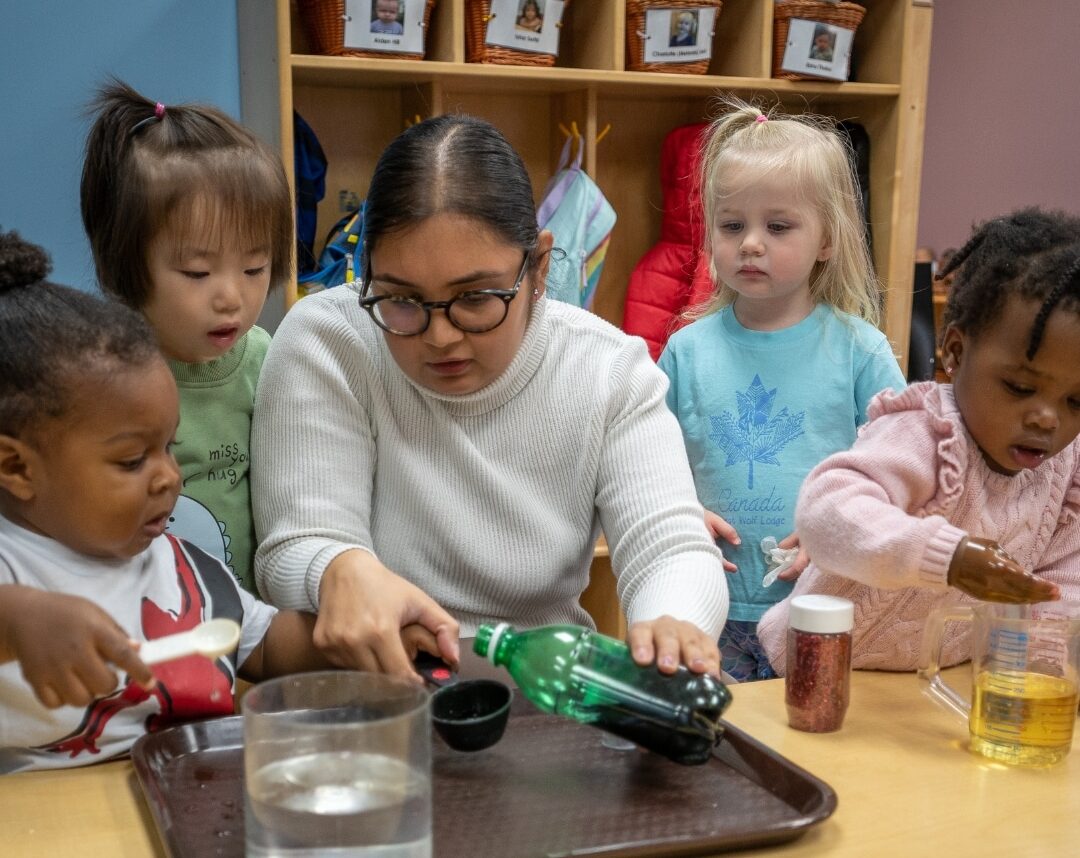
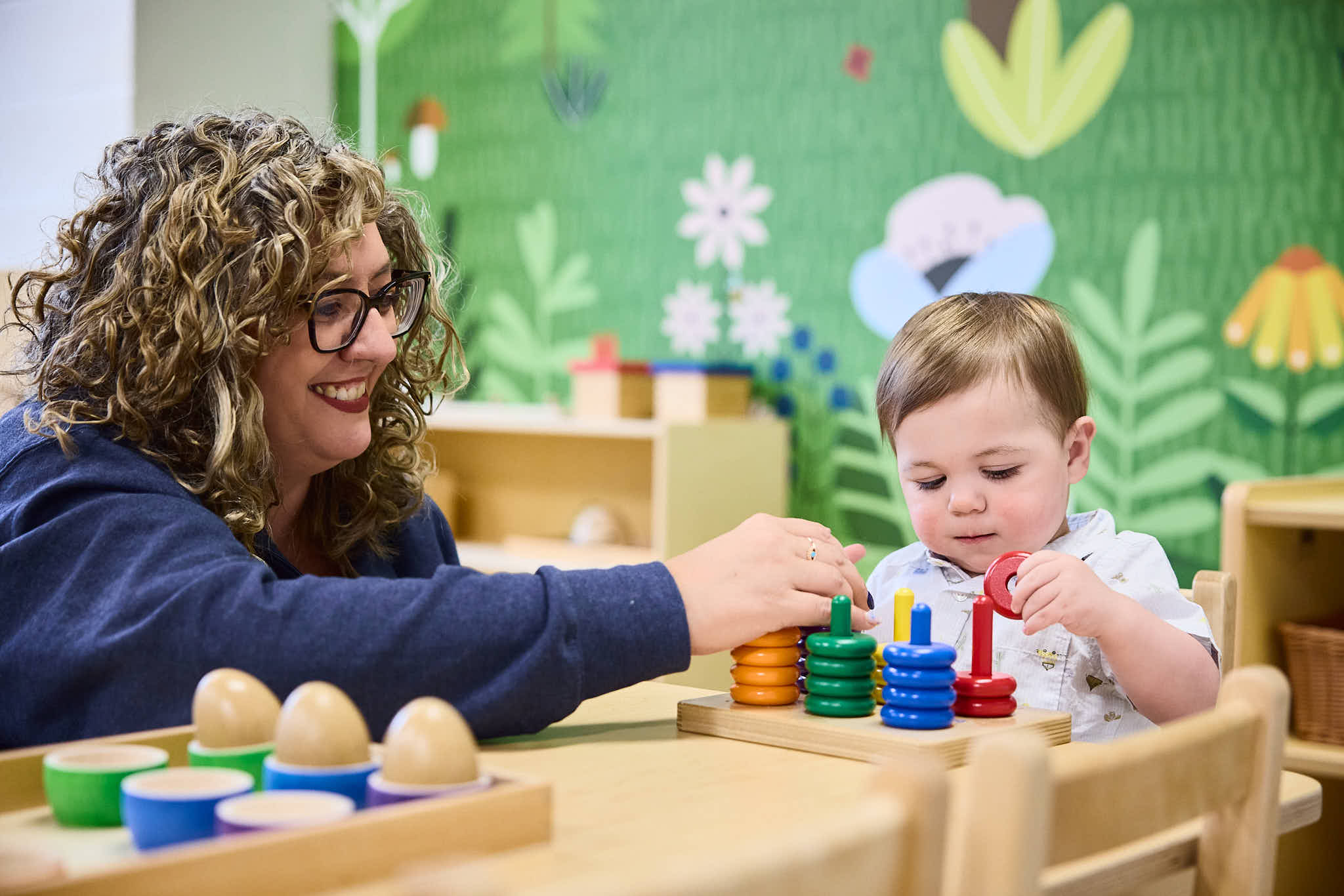
Teacher conducting experiment with for children sitting beside her
We love to think of our children as future scientists and the journey begins with simple exploration. At this age, it’s about:
- Building cause-and-effect understanding
- Encouraging observation and questioning
- Strengthening fine motor skills and focus
- Introducing early math and sensory language
- Supporting executive function (like memory and attention)
At The Learning Nest, our toddler program integrates science through nature walks, open-ended and hands-on discovery that’s developmentally aligned. Educators use inquiry-based questions like “What do you think will happen?” or “Can you show me how it works?”all while allowing children to test and observe in a safe, exploratory environment.
1. Rainbow Walking Water
Materials:
- 6 clear cups
- Water
- Paper towels
- Food colouring (red, yellow, blue)
How It Works:
Fill every other cup with water and add food colouring (e.g., red, yellow, blue). Fold paper towels into long strips and place one end in a coloured cup and the other into an empty one. Watch as the coloured water “walks” up the paper towel and mixes to form new colours in the empty cups!
Learning Outcome:
Demonstrates capillary action, introduces colour mixing, encourages patience and observation.
2. Baking Soda & Vinegar “Volcano”
Materials:
- Baking soda
- Vinegar
- A container (like a small bowl or cup)
- Optional: food colouring and dish soap
How It Works:
Place baking soda in a cup. Add a drop of food colouring and dish soap. Pour in vinegar and watch the fizzy reaction!
Learning Outcome:
A toddler-safe chemical reaction showing gas formation. Builds cause-effect understanding and introduces new vocabulary (fizz, bubble, foam)
3. Sink or Float Test
Materials:
- A bin or bowl of water
- A mix of small items: spoon, crayon, block, feather, orange slice, etc.
How It Works:
Let your toddler drop items into the water and guess if they’ll sink or float.
Learning Outcome:
Introduces hypothesis testing, observation and early physics concepts.
At The Learning Nest, this experiment is often paired with language development by labeling each item and describing textures and materials.
4. Ice Cube Rescue
Materials:
- Small plastic toys
- Ice cube tray
- Water
- Salt, warm water or small droppers
How It Works:
Freeze small toys in an ice cube tray. Let your toddler “rescue” them using warm water or salt. Droppers add an extra dose of fine motor fun!
Learning Outcome:
Explores states of matter (solid to liquid), problem-solving and dexterity.
Tip: Incorporate this during outdoor winter activities as a way to connect science with weather-based learning, something we do daily at The Learning Nest.
5. Colour Mixing in a Bag
Materials:
- Ziplock bags
- Red, yellow and blue paint
- Tape
How It Works:
Add two blobs of different colours to each bag (red + yellow, blue + yellow etc.). Seal tightly, tape to a window or table and let your child squish and mix!
Learning Outcome:
Introduces colour theory, improves sensory exploration and offers no-mess tactile stimulation.
6. Magnetic vs. Non-Magnetic Hunt
Materials:
- Child-safe magnets (like a magnetic wand)
- Items like paper clips, wooden blocks, cotton balls, coins, spoons
How It Works:
Let your toddler test each item to see what sticks and what doesn’t. Use a chart (with pictures) to sort “magnetic” and “non-magnetic” finds.
Learning Outcome:
Teaches material properties, sorting and early classification skills.
In our toddler classrooms, we often pair this with sensory bins or themed treasure hunts to support attention and memory development.
7. Sound Exploration Bottles
Materials:
- Empty bottles
- Items to fill: rice, bells, beads, water, coins
- Tape to secure lids
How It Works:
Fill bottles with different materials. Let your toddler shake and compare the sounds.
Learning Outcome:
Supports auditory discrimination, rhythm and sensory integration.
At The Learning Nest, sound is closely tied to music and movement sessions, which help toddlers process auditory input and build expressive language.
How The Learning Nest Supports Early STEM Learning
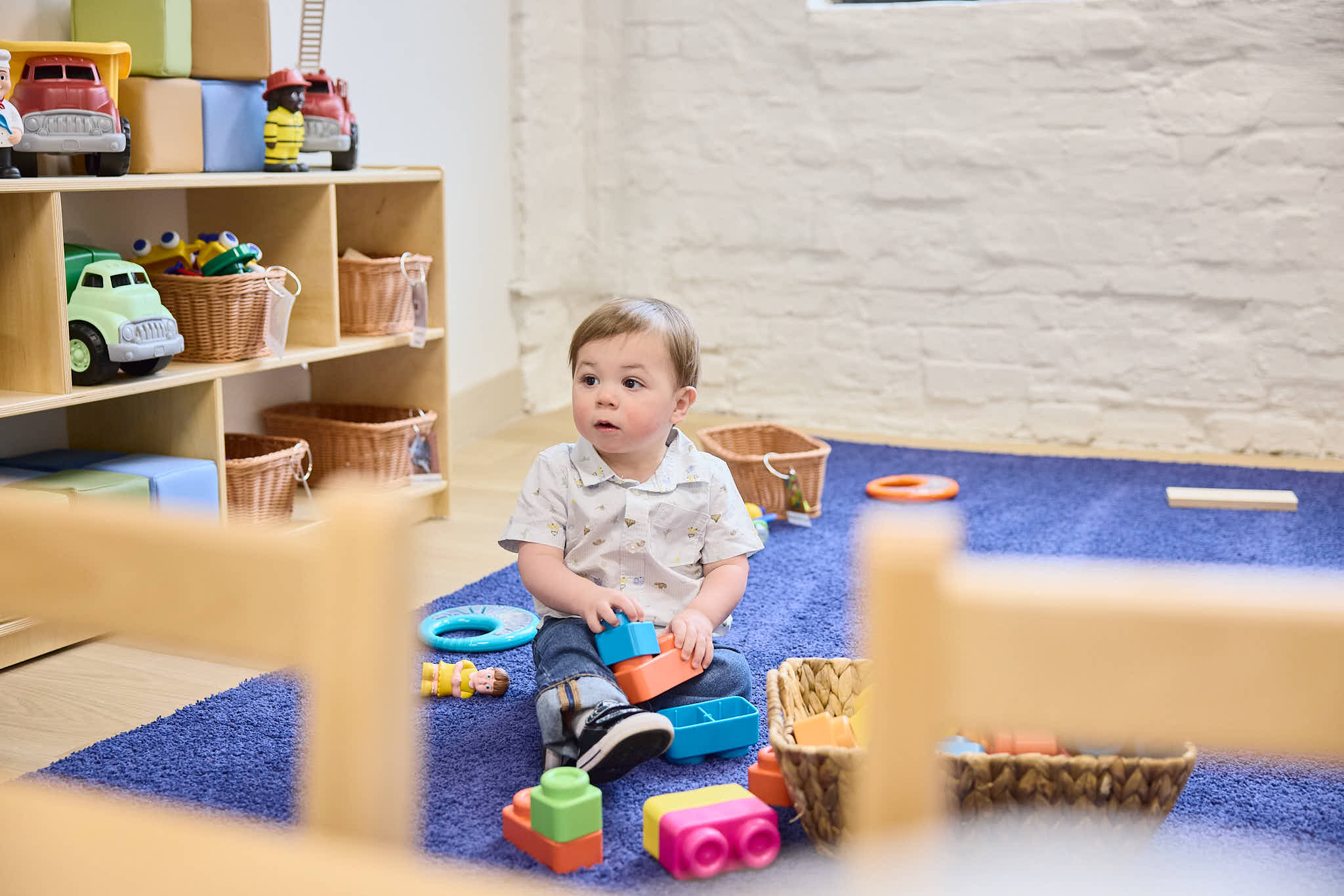
From sensory bins to collaborative experiments, science is integrated naturally across our daily routines. Here’s how:
Inquiry-Based Teaching
Our educators ask open-ended questions, guide toddlers to predict outcomes and help them narrate what they observe, fostering cognitive and language development side by side.
Hands-On Discovery
Activities are designed to be open-ended. Toddlers are invited to pour, scoop, test and repeat, building motor control and independent thinking.
Safe and Supervised Exploration
With small class sizes and attentive educators, children are supported as they take developmentally appropriate risks, whether it’s balancing a spoon or watching ice melt in their hands.
Natural Environment Connections
Our outdoor classrooms and naturalized playgrounds bring real-world science from puddle exploration to collecting pinecones and leaves.
Learn more about our Toddler Program at The Learning Nest and how we support holistic growth through responsive teaching and hands-on learning.
Tips for Parents: Making Science Safe and Fun at Home
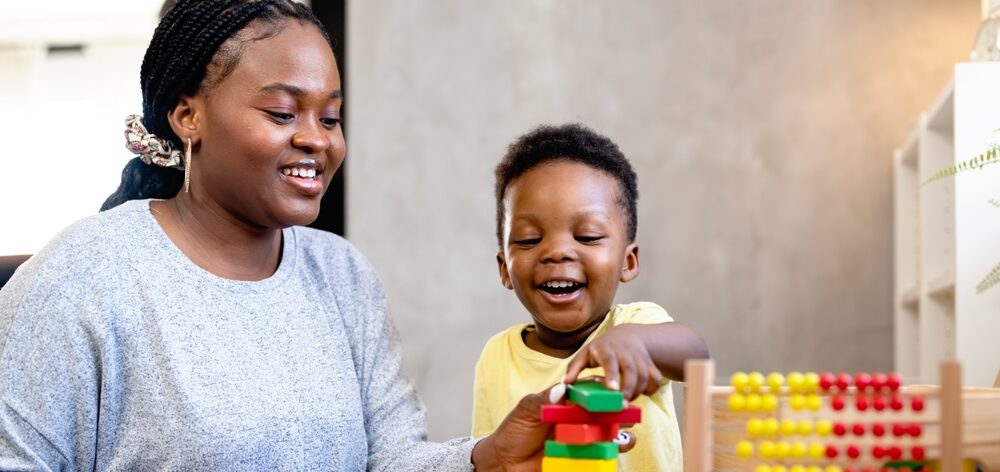
- Always supervise: While these activities are safe, adult guidance ensures safety and enhances learning.
- Embrace the mess: Science is often sticky, wet or bubbly and that’s part of the fun.
- Follow your toddler’s interests: If they love water, do more pouring games. If they love sound, explore instruments and echoes.
- Use repetition: Toddlers thrive with repeated experiences. Don’t hesitate to revisit a favourite experiment again and again.
- Talk about it: Label actions, describe results and encourage toddlers to express what they see. This builds language and connection.
Introducing toddlers to science isn’t about facts or formulas, it’s about fostering curiosity, observation and a love of learning. With the right guidance and freedom to explore, toddlers develop not just knowledge, but confidence, persistence and joy in discovery.
At The Learning Nest, our toddler classrooms are designed to nurture these very traits. Through thoughtful educator guidance and intentionally prepared environments, we support cognitive, social and emotional development every day.
Interested in giving your toddler a head start in hands-on learning?
Book a tour today at The Learning Nest in North York or The Junction.