Choosing the right time to start daycare is a big decision for families, one filled with excitement, questions, and the desire to do what’s best for your child’s growth. While there’s no one-size-fits-all answer, understanding developmental milestones and emotional readiness can help parents make a confident, informed choice.
At The Learning Nest in North York and The Junction, we support children from infancy through preschool, offering a nurturing, social-based learning environment designed to help every child thrive at the stage that’s right for them.
Understanding Readiness: It’s About Development, Not Just Age
Instead of focusing on a specific month, it is more helpful to understand the developmental milestones associated with key age groups.
| Age Group | Key Developmental Focus | Emotional Readiness |
| Infants (0–12 Months) | Physical growth, sensorimotor skills, secure attachment formation. | Needs highly responsive care to build trust. May experience separation anxiety starting around 6–9 months (object permanence). |
| Young Toddlers (12–24 Months) | Mobility (walking), early language, blossoming independence. | Ready for short, focused social interaction. Separation anxiety is often at its peak but is temporary. |
| Preschoolers (2–5 Years) | Language explosion, mastery of motor skills, strong social curiosity. | Actively seeks peer interaction and is ready for structured social learning environments. |
Daycare for Infants (0–12 Months)
Infant daycare can be a wonderful option for parents who need childcare support early on. Babies at this age benefit from:
- Consistent routines
- Secure attachment with caring educators
- Early sensory stimulation
- A calm, responsive environment
However, if starting before 12 months, many young infants are still adjusting to sleep patterns and separation from parents. Our Infant educators specialize in providing warm, responsive care that supports during this period of rapid development. We maintain low caregiver-to-child ratios, ensuring each baby receives frequent cuddles, eye contact, and predictable responses to their cues. This level of personalized care is crucial for building the secure attachment needed to thrive.
Daycare for Toddlers (12–24 Months)
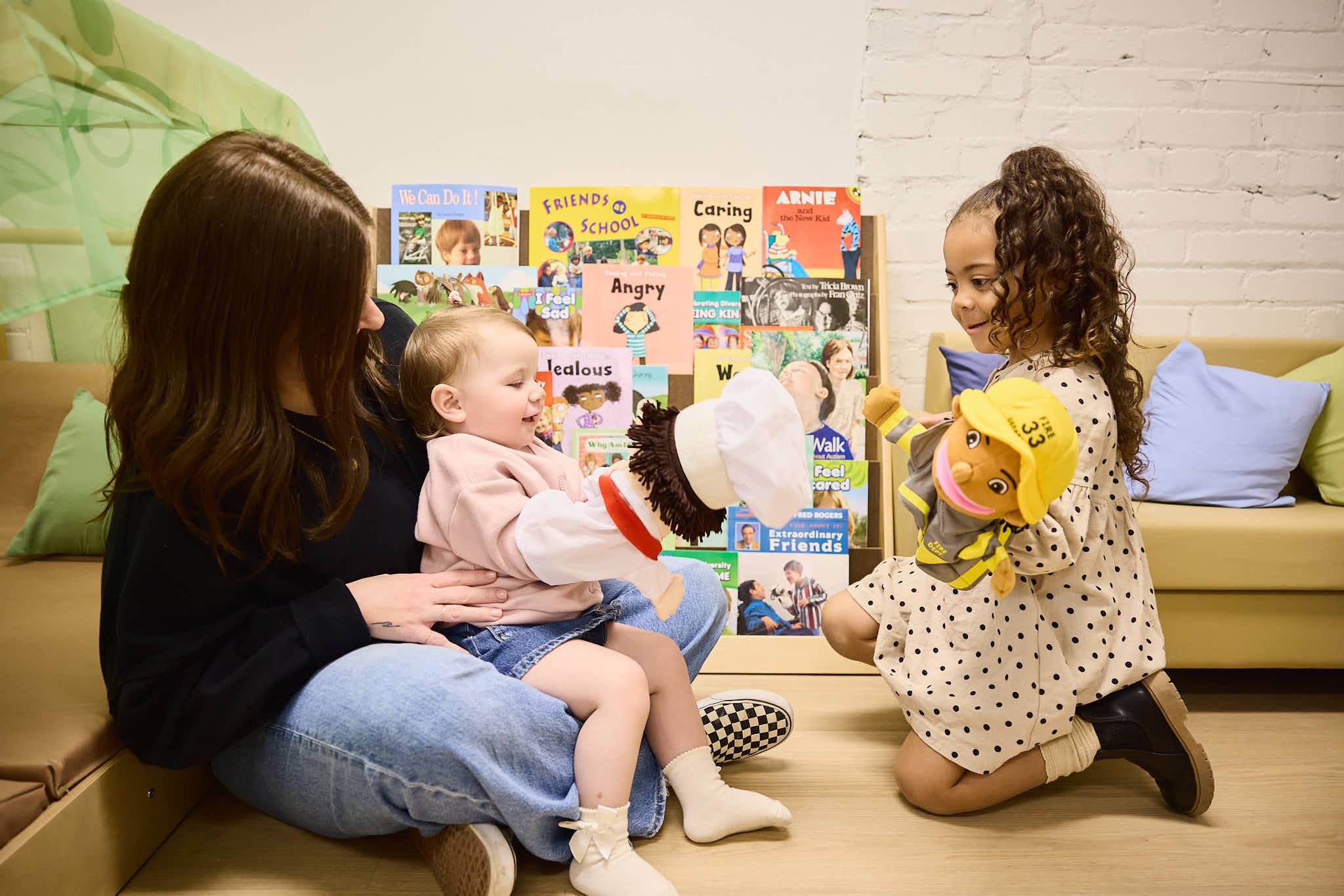
The young toddler stage is often considered a sweet spot for starting day care, as children are mobile and ready to explore, yet still flexible in adjusting to new routines.
Key Considerations for Toddlers:
- Independence vs. Clinginess: Toddlers want to explore their world, but they also experience intense separation anxiety. This can result in strong tears at drop-off. As we discuss in our transition guides, this is normal and temporary; it does not mean they aren’t ready for care.
- Social Observation: At this age, interaction is less about peer play and more about parallel play, observing and playing alongside other children. This is the foundation for later cooperative skills.
- Language and Communication: Exposure to a language-rich environment at daycare can accelerate language acquisition, as toddlers are constantly hearing new words from peers and educators.
We focus on guided exploration and emotional coaching. Our educators use techniques like naming emotions and providing gentle redirection to help toddlers navigate their big feelings, especially during drop-off. The environment is carefully set up to support safe independence and curiosity.
Daycare for Preschoolers (2–5 Years)
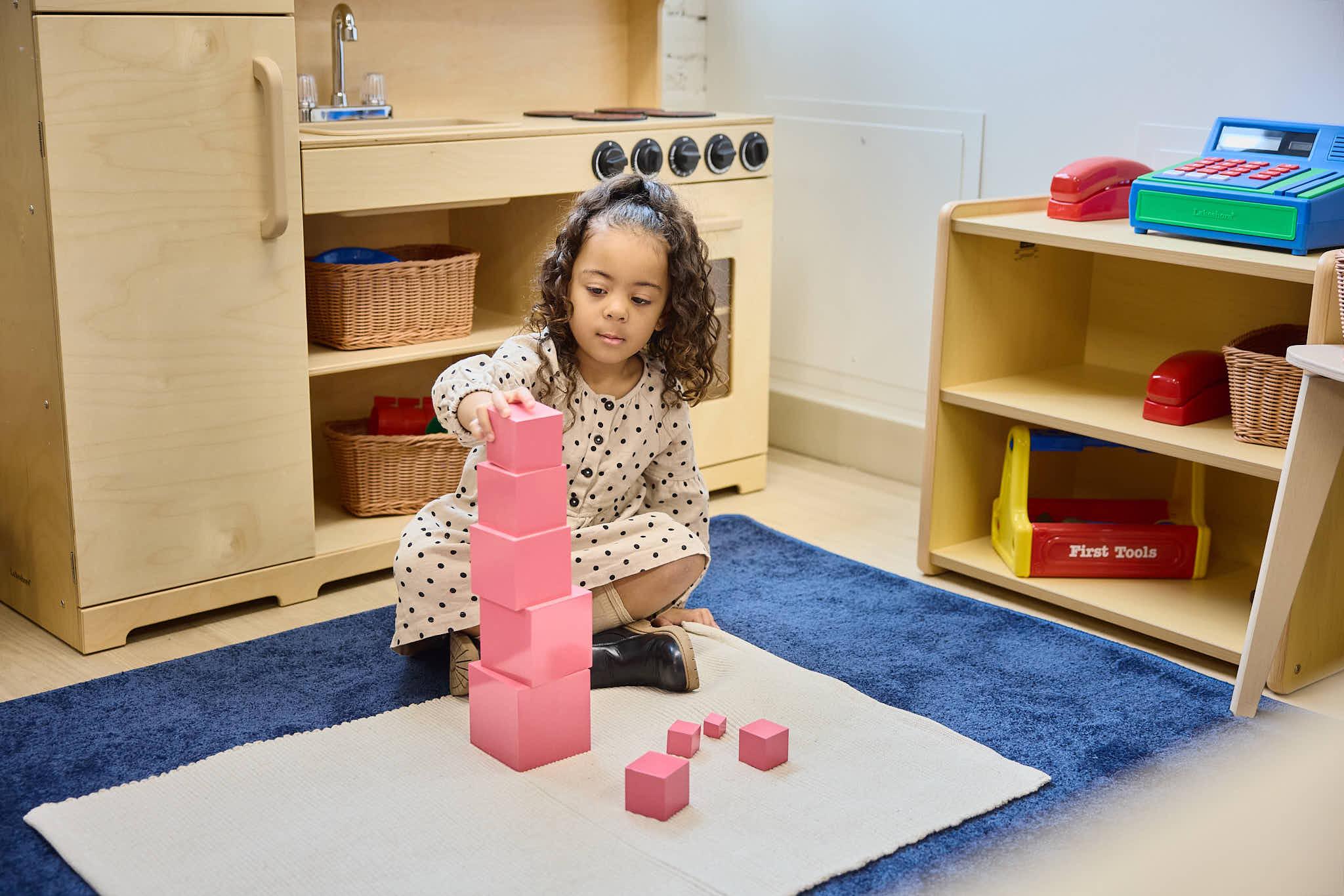
Preschoolers are often very ready for structured learning and peer interaction. This stage is marked by:
- Peer Motivation: Preschoolers are actively motivated by their peers. They crave cooperative play, social interaction, and team activities.
- Curriculum Readiness: They are cognitively ready for early academic concepts integrated through play, such as letter sounds, counting, and science experiments.
- Self-Care Skills: They are working on vital self-help skills (potty training, dressing, feeding), and the structure of a daycare often supports the mastery of these milestones.
Our programs are designed around a social-based learning curriculum. We use group activities, intentional play, and projects to foster communication, critical thinking, and empathy, preparing them not just academically, but socially and emotionally, for the next stages of schooling.
How The Learning Nest Supports Every Stage
Whether you’re considering infant care or looking for a preschool program, The Learning Nest is committed to supporting children at every developmental phase.
Here’s what sets us apart:
Proven, evidenced-based curriculum: Grounded in research and thoughtfully balances social learning with the independence central to Montessori philosophy. Children are supported through collaborative experiences that build communication and empathy, while also engaging in purposeful, self-directed work that fosters focus, confidence, and autonomy. This balanced approach allows each child to grow as both an independent learner and a valued member of the classroom community.
Small Class Sizes & Individual Attention: Educators take time to understand each child’s personality, interests, and comfort level.
Warm, Family-Centred Communication: We work closely with parents to help make transitions smooth and positive.
Locations Designed for Local Families: With centres in North York and The Junction, we offer accessible, community-oriented care tailored to the needs of Toronto families.
Next Steps for Your Family
The best age to put your child in daycare is truly the age that works best for your family’s dynamic and your child’s specific needs. Whether you choose to start at three months or three years, focusing on a gentle transition plan and selecting a center that prioritizes responsive, individualized care is the most important step.
If you are currently evaluating the right time and environment for your child, connect with us! Our directors can walk you through our developmentally appropriate routines for each age group and discuss how we create a loving, smooth start for every child.